
Damphu
1 listing
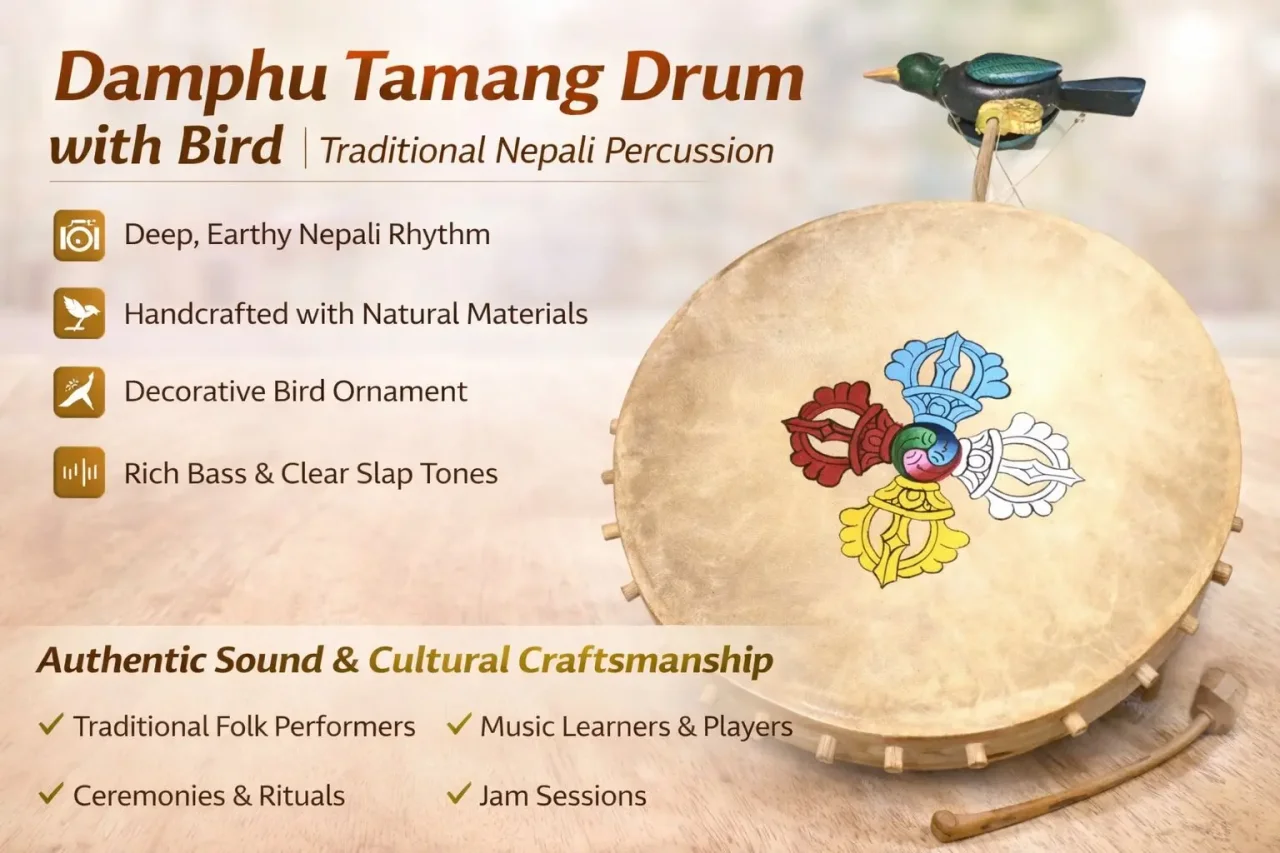
Damphu in Nepal – Rhythm Rooted in Ancestral Ground
The Damphu does not rush.
Its rhythm is steady. Circular. Grounded.
Deeply connected to the Tamang community of Nepal, the Damphu carries beats that are more than musical patterns — they are part of ritual, story, and shared memory.
It is not a performance drum built for spotlight.
It is a communal instrument built for connection.
If you are exploring a Damphu in Nepal or comparing the current Damphu price in Nepal, understanding its cultural weight is just as important as understanding its sound.
What Is a Damphu?
The Damphu is a traditional single-headed frame drum.
Its structure is simple:
- A circular wooden frame
- A stretched animal-skin membrane
- Decorative cultural elements in some versions
It is played by hand, often during Tamang Selo performances and traditional gatherings.
The tone is earthy and resonant — not sharp, not aggressive — but full and rhythmic.
Because it is single-headed, its sound is open and direct, carrying naturally without mechanical complexity.
Cultural Identity and Symbolism
For the Tamang community, the Damphu represents more than rhythm.
It is present in:
- Tamang Selo songs
- Cultural dances
- Traditional ceremonies
- Community festivals
Its beat often supports storytelling — songs of heritage, migration, celebration, and remembrance.
The Damphu is not typically played alone. It exists within voice and movement.
Its purpose is unity.
Crafted by Hand, Shaped by Tradition
Authentic Damphus are handmade by local artisans.
Key elements that define quality:
- Strong, well-cured wooden frame
- Properly stretched goat or animal skin
- Even tension across the surface
- Balanced weight and grip
A quality Damphu should produce:
- Deep, rounded resonance
- Consistent response across the membrane
- Durable structure resistant to minor humidity changes
Because natural materials are used, slight tonal variations are normal — and part of authenticity.
📍 Finding Damphu Near You
If you are searching for “Damphu near me,” testing the drum in person is important.
Before purchasing:
- Tap around the entire surface to test even tension
- Listen for dull spots or uneven vibration
- Inspect the frame for cracks
- Check skin tightness and finishing
- Hold it comfortably to assess balance
Listings may be available in Kathmandu, Lalitpur, and regions with strong Tamang cultural presence.
Buying locally not only ensures quality — it supports living tradition.
💰 Damphu Price in Nepal – Understanding Craft Value
Damphu pricing reflects craftsmanship and material quality rather than branding.
General market range:
| Type | Estimated Price (NPR) |
|---|---|
| Basic Cultural Model | Rs. 2,000 – 5,000 |
| Handcrafted Performance Grade | Rs. 5,000 – 12,000 |
| Artisan / Decorated Models | Rs. 12,000 – 25,000+ |
Pricing differences depend on:
- Wood durability
- Skin preparation quality
- Tension stability
- Decorative craftsmanship
- Artisan reputation
Lower-cost models may serve for cultural display, while performance-grade instruments provide better tonal stability.
Damphu in Contemporary Cultural Spaces
While deeply traditional, the Damphu now appears in:
- Cultural stage programs
- Folk revival concerts
- Tourism and heritage festivals
- Cross-cultural music collaborations
Even in modern settings, its rhythm retains its rooted character.
It does not try to be modern.
It remains itself.
❓ Frequently Asked Questions
What is the starting Damphu price in Nepal?
Basic models generally begin around NPR 2,000.
Is Damphu difficult to learn?
Basic rhythms are approachable, but mastering traditional Selo patterns requires practice and cultural understanding.
Does skin quality affect sound?
Yes. Properly stretched and cured skin improves resonance and tonal clarity.
Is Damphu only used in Tamang culture?
It is primarily associated with Tamang tradition but may appear in broader cultural events.
How long does a Damphu last?
With protection from excessive moisture and proper care, it can last many years.
Explore Damphu in Nepal
Discover handcrafted Damphus available near you.
Whether you are honoring tradition, performing cultural music, or preserving heritage, the Damphu carries rhythm that connects people across generations.