
Sarangi
1 listing
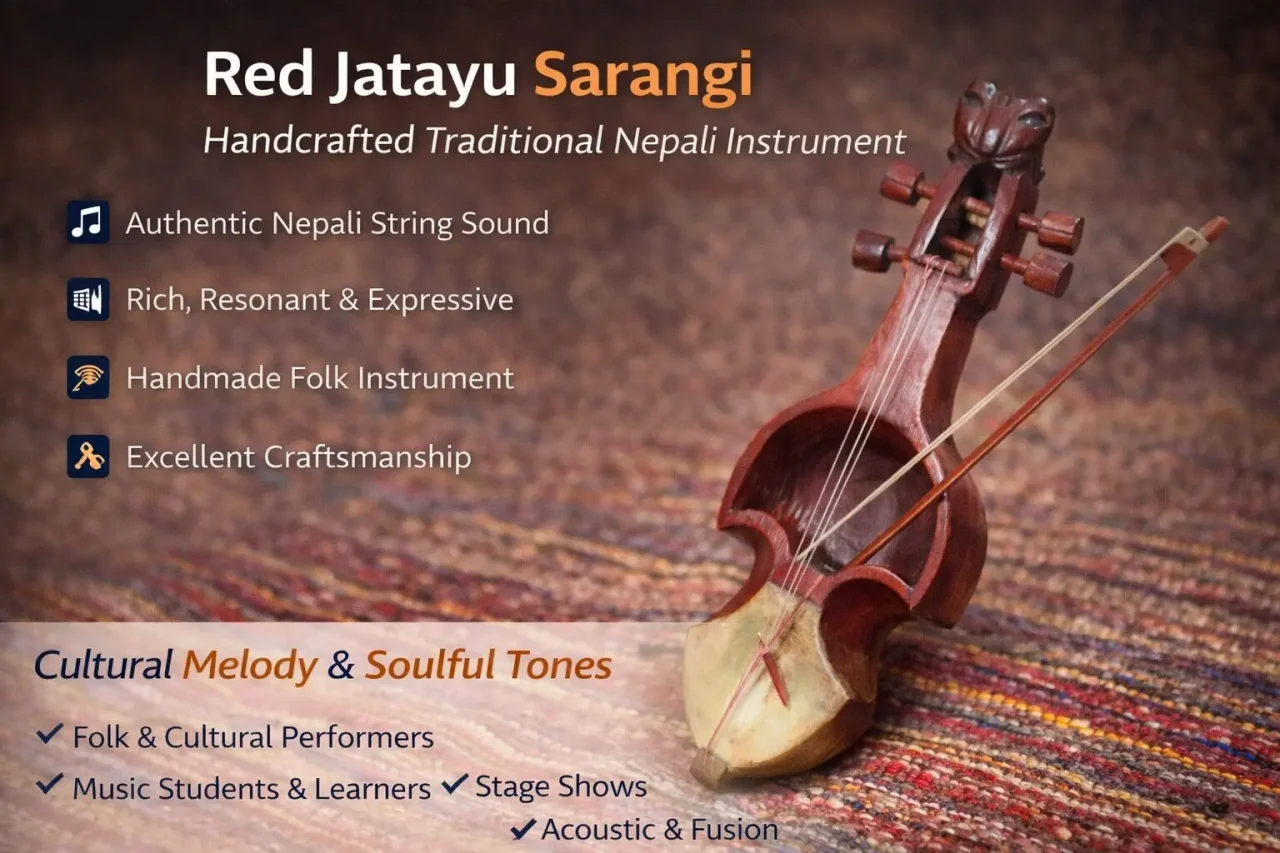
🎻 Sarangi in Nepal – The Instrument That Speaks Through Strings
The Sarangi does not simply produce music.
It expresses emotion.
For centuries, this bowed string instrument has carried the stories, poetry, and melodies of Nepal across hills and valleys. Before amplification and recording technology, traveling Gandharva musicians used the Sarangi to share songs from village to village.
Its sound is intimate, expressive, and deeply human.
If you are exploring a Sarangi in Nepal or comparing the current Sarangi price in Nepal, understanding its history and craftsmanship will help you make a meaningful choice.
What Makes the Sarangi Unique?
The Sarangi is traditionally carved from a single block of hardwood. Its hollow body is partially covered with animal skin, and it is played with a bow made from wood and horsehair.
A traditional Nepali Sarangi typically includes:
- Four primary playing strings
- Sympathetic strings (in some versions)
- Wooden tuning pegs
- A skin-covered resonating chamber
Unlike fretted instruments, the Sarangi has no fixed pitch markers. The musician presses the strings directly, allowing subtle tonal variations and microtones.
This is why its sound often resembles the human voice.
It does not just play notes — it carries feeling.
Cultural and Historical Significance
The Sarangi is closely associated with the Gandharva community, who preserved and performed Nepali folk music through oral tradition.
Historically, it accompanied:
- Folk ballads
- Storytelling performances
- Regional songs
- Traditional dohori music
- Cultural gatherings
In recent years, the Sarangi has gained renewed appreciation. It now appears in:
- Contemporary folk bands
- Fusion collaborations
- Film music
- International world music festivals
While its roots remain traditional, its presence continues to evolve.
Craftsmanship – A Hand-Carved Instrument
Authentic Sarangis are handcrafted.
Key elements influencing quality include:
- Wood density and curing
- Precision of carving
- Skin tension and alignment
- String quality
- Peg stability
A well-crafted Sarangi offers:
- Warm and balanced resonance
- Smooth bow response
- Clear tonal projection
- Stable tuning across strings
Because each instrument is handmade, subtle tonal differences are natural.
📍 Finding Sarangi Near You
If you are searching for “Sarangi near me,” inspecting the instrument in person is strongly recommended.
Before purchasing:
- Bow each string to test tonal clarity
- Check for even sound response
- Inspect peg stability
- Examine the carved body for cracks
- Assess skin tension and finishing
Listings may be available in Kathmandu, Lalitpur, Pokhara, and regions known for traditional artisans.
Buying locally helps ensure authenticity and supports heritage craftsmanship.
💰 Sarangi Price in Nepal – What Determines Value?
Sarangi pricing depends largely on craftsmanship and structural precision.
General market range:
| Type | Estimated Price (NPR) |
|---|---|
| Beginner / Decorative | Rs. 7,000 – 15,000 |
| Handcrafted Performance Grade | Rs. 15,000 – 35,000 |
| Professional Artisan Models | Rs. 35,000 – 80,000+ |
Factors affecting price include:
- Quality of wood
- Carving accuracy
- Skin and string materials
- Artisan reputation
- Overall tonal balance
Lower-priced models may be suitable for display or beginners, while serious performers should prioritize craftsmanship.
Learning and Playing the Sarangi
The Sarangi requires patience and ear training.
Because it has no frets, pitch accuracy depends entirely on the player’s control and listening ability. While challenging, this also allows deep expressive flexibility.
For musicians committed to traditional or expressive string music, the Sarangi offers a uniquely rewarding experience.
❓ Frequently Asked Questions
What is the starting Sarangi price in Nepal?
Basic models generally begin around NPR 7,000, depending on craftsmanship.
Is the Sarangi difficult to learn?
It requires dedication and ear training, but steady practice leads to strong expressive control.
Is Sarangi still used in modern music?
Yes. It appears in contemporary folk, fusion, and international projects.
Are Sarangis handmade?
Most authentic Sarangis are hand-carved by local artisans.
How long does a Sarangi last?
With proper care and stable humidity conditions, it can last many years.
🎻 Explore Sarangi in Nepal
Discover handcrafted Sarangis available near you.
Whether you are preserving tradition, performing folk music, or exploring expressive string sound, the Sarangi remains one of Nepal’s most distinctive musical voices.