
Tungna
1 listing
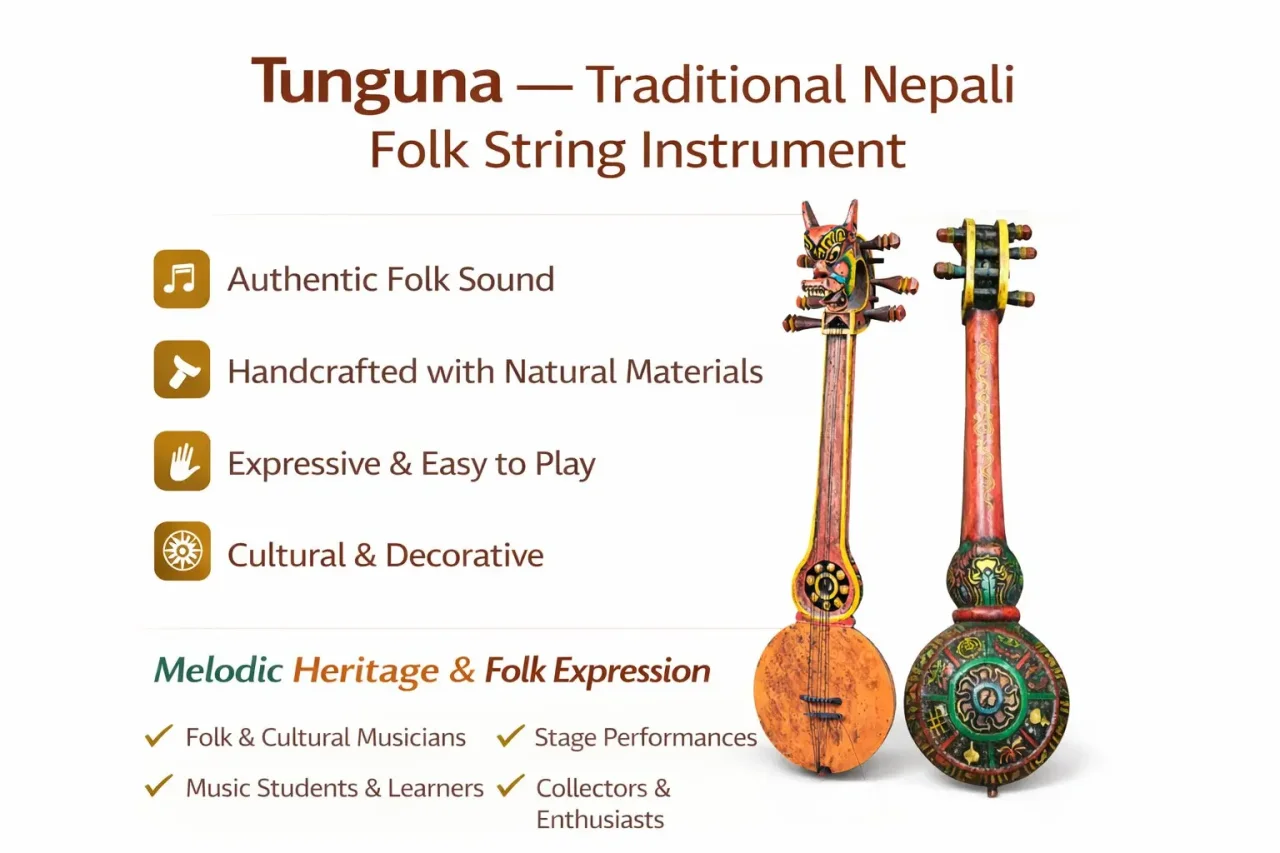
Tungna in Nepal – A Mountain Melody Carved from Wood
In the highlands of Nepal, music does not shout. It travels quietly.
The Tungna was born in that quiet.
Used traditionally among Himalayan communities — especially the Gurung people — the Tungna carries melody that feels intimate and grounded. It is not an instrument of grand performance halls. It belongs to gatherings, storytelling, and shared evenings.
If you are looking for a Tungna in Nepal or exploring the current Tungna price in Nepal, understanding its simplicity is the first step.
A String Instrument Shaped by the Mountains
The Tungna is a small, four-stringed plucked instrument carved from solid wood.
Its structure is minimal:
- A hand-carved wooden body
- A hollow internal chamber
- Four metal strings
- Wooden tuning pegs
There are no mechanical systems. No amplification. No complexity.
The sound comes from wood resonance and string vibration — steady, rhythmic, and warm.
Unlike the Sarangi, which sings emotionally through a bow, the Tungna offers gentle harmonic support. It accompanies voice and story rather than leading them.
Where the Tungna Belongs
The Tungna has traditionally been used in:
- Folk songs of Himalayan communities
- Village gatherings
- Cultural storytelling
- Seasonal and regional celebrations
Because of its size, it was practical for mountain life — light enough to carry, durable enough to endure travel.
Its sound reflects that environment: clear but never overwhelming.
Craftsmanship – Why Simplicity Requires Precision
Although the Tungna appears simple, quality depends on careful craftsmanship.
A well-made Tungna should have:
- Properly cured hardwood
- Clean, hollowed internal chamber
- Stable wooden pegs
- Even string alignment
- Balanced tension across all strings
The carving depth influences resonance.
The wood density affects sustain.
Each handmade piece carries slight tonal individuality — and that is part of its authenticity.
📍 Finding Tungna Near You
If you are searching for “Tungna near me,” in-person testing is recommended.
Before purchasing:
- Pluck each string and listen for clean sustain
- Check for buzzing or uneven resonance
- Turn pegs gently to test tuning stability
- Inspect body carving for cracks
- Assess comfort in hand positioning
Listings may be available in Kathmandu, Pokhara, and regions connected to Himalayan cultural communities.
Buying locally helps preserve traditional craftsmanship.
💰 Tungna Price in Nepal – Understanding the Range
Tungna pricing reflects wood quality and craftsmanship rather than branding.
Typical price range:
| Type | Estimated Price (NPR) |
|---|---|
| Basic Handcrafted | Rs. 5,000 – 12,000 |
| Performance Grade | Rs. 12,000 – 25,000 |
| Artisan-Carved / Detailed | Rs. 25,000 – 50,000+ |
Factors influencing price include:
- Wood durability
- Carving precision
- String setup quality
- Decorative detail
- Artisan reputation
Lower-priced models may serve decorative purposes, while performance-grade instruments offer better tuning stability and tonal clarity.
Tungna in Contemporary Use
Though rooted in tradition, the Tungna has found renewed space in:
- Cultural revival programs
- Acoustic fusion projects
- Heritage music festivals
- Educational demonstrations
Its tone blends naturally with guitars, flutes, and modern acoustic instruments.
❓ Frequently Asked Questions
What is the starting Tungna price in Nepal?
Basic handcrafted models typically begin around NPR 5,000.
Is Tungna suitable for beginners?
Yes. Its simple string structure makes it approachable for new learners.
Does wood quality affect the sound?
Yes. Properly cured hardwood improves resonance and durability.
Is Tungna still used today?
Yes. It appears in cultural preservation programs and acoustic collaborations.
How long does a Tungna last?
With proper care and protection from moisture, it can last many years.
Explore Tungna in Nepal
Discover handcrafted Tungnas available near you.
For those drawn to Himalayan tradition and intimate string sound, the Tungna offers warmth, simplicity, and cultural continuity.