
Manual versus Electric Wheelchairs: A Technical and Practical Comparison for Home Care
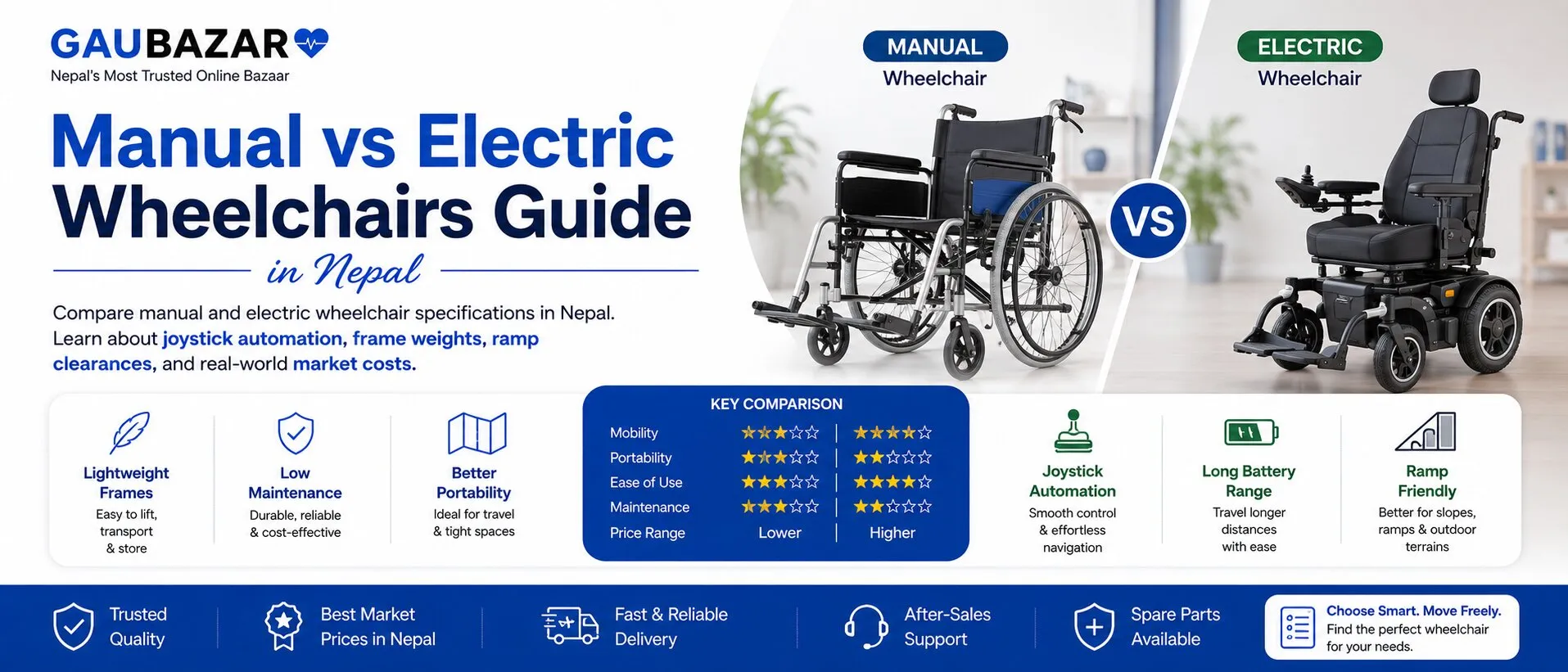
Establishing an optimal home care environment for an individual navigating limited mobility demands a thorough evaluation of durable medical equipment. The choice of personal mobility aids impacts not only the psychological autonomy and physical safety of the user but also dictates the daily physical strain experienced by family caregivers. When sourcing a device, the primary architectural decision revolves around selecting either a traditional manual mechanical frame or an automated motorized propulsion system.
Many households make the mistake of choosing a model based strictly on initial retail expenditure without checking the user physiological upper-body strength or calculating residential spatial constraints. An underpowered or overly restrictive layout can limit independent exploration, while a heavy motorized system might prove unmanageable for daily transport in standard urban transport. To ensure absolute transparency and provide a definitive technical benchmark, this guide breaks down propulsion physics, structural weight limits, and lifestyle practicalities before you purchase a wheelchair in Nepal.
1. Structural Material and Weight Distribution Metrics
To analyze mobility equipment with the expertise of a clinical rehabilitation specialist, you must examine the structural engineering of the main frame chassis. The presence of motors, control modules, and battery arrays introduces completely distinct transport requirements compared to basic mechanical chairs:
- The Manual Framework Profile: Standard self propelled and transit units prioritize structural simplicity. Constructed from high tensile steel or lightweight aluminum alloys, their empty frame weight typically spans a manageable eleven to eighteen kilograms. This low mass profile allows caregivers to collapse the cross braces and lift the entire assembly into a vehicle boot within seconds, making manual systems highly flexible for medical follow ups.
- The Electric Motorized Profile: Motorized setups integrate heavy industrial components, including dual spur gear motors, heavy steel gearboxes, electronic command joysticks, and high capacity lead acid or lithium ion batteries. Consequently, the unladen weight of an automated system rarely drops below thirty five kilograms and can exceed seventy kilograms for heavy duty models. This extreme weight requires dedicated storage space or ramp equipped vehicles for transport.
- Puncture Protection and Tire Footprints: Manual models often utilize narrow, solid polyurethane tires mounted on large twenty four inch spoke wheels to minimize rolling resistance during self propulsion. Electric models carry significantly higher gross weights, necessitating wider, deep tread pneumatic or foam filled rubber tires on smaller eight to twelve inch drive wheels to ensure stable traction over uneven terrain.
2. Standardized Mechanical and Cost Comparison
The total financial investment required for a mobility solution is determined directly by its electronic automation integration, battery chemistry classifications, and local supplier configurations. To assist search engines and healthcare managers in evaluating machine specifications, review this comprehensive parameter matrix reflecting active valuations across the country:
| Mobility System Classification | Average Marketplace Cost | Average Framework Weight | Maximum Operational Range |
|---|---|---|---|
| Basic Steel Transit Chair | Rs. 10000 to Rs. 12000 | 16 to 19 Kilograms | Manual Attendant Dependent |
| Premium Aluminum Self-Propelled | Rs. 13000 to Rs. 16500 | 11 to 13 Kilograms | User Upper-Body Dependent |
| Deluxe Reclining Commode Unit | Rs. 24000 to Rs. 28500 | 22 to 26 Kilograms | Manual Attendant Dependent |
| Standard Lead-Acid Electric Power | Rs. 125000 to Rs. 135000 | 45 to 55 Kilograms | 15 to 20 Kilometers Per Charge |
| Premium Lithium Folding Automatic | Rs. 140000 to Rs. 198000 | 28 to 34 Kilograms | 26 to 31 Kilometers Per Charge |
When selecting between these systems, balancing the user physical independence against the household allocation parameters is vital. Navigating the active digital classified index allows you to quickly compare regional variations and track down a competitive wheelchair price in nepal. Securing an entry level electric model or a lightweight manual system from certified suppliers ensures you secure complete diagnostic value without paying excessive retail inflation.
3. User Autonomy and Physiological Pre-Requisites
The core clinical deciding factor between manual and electronic models must center on the medical condition and remaining muscle control of the patient. Providing an incompatible system can compromise safety and accelerate physical fatigue:
Manual Propulsion Mandates: To operate a self propelled model equipped with metallic hand rims safely, a patient must possess symmetric upper body strength, healthy shoulder articulation, and consistent manual dexterity. If a patient deals with unilateral weakness, such as a post stroke hemiplegia profile, they cannot steer a standard manual chair straight and will require a caregiver to handle all propulsion transit tasks.
Electric Automation Integration: For individuals dealing with severe generalized weakness, muscular dystrophy, or high level spinal lesions, an electric system restores uninhibited personal mobility. By utilizing an intuitive, 360 degree intelligent joystick module mounted on the armrest, the operator can turn, accelerate, and stop the system using minor finger movements. Investing a higher initial layout to secure a verified electric wheelchair price in nepal yields a complete return in mental health wellness and physical liberty for the user.
4. Spatial Geometry and Environmental Adaptability
Navigating different environmental settings highlights the distinct trade offs between manual and automatic system geometries. Take precise spatial tape measurements of your home layouts against these three key parameters:
- Indoor Turning Clearances: Standard manual chairs can pivot tightly because the user can rotate the large rear wheels in opposite directions manually. Electric power models have a slightly longer wheelbase to accommodate motor housings and anti tipper safety wheels. Ensure your corridors provide an open turning zone of at least one hundred and fifty centimeters to avoid getting stuck in tight corners.
- Ramp Ascent Thresholds: Climbing residential ramps on a manual frame demands immense upper body exertion from the user or significant physical pushing force from an attendant. A premium automatic wheelchair price in nepal incorporates heavy duty spur gear motors engineered to ascend inclines up to eight or ten degrees smoothly without any physical human effort, making them ideal for hilly suburban neighborhoods.
- Braking and Descent Safety: Manual chairs rely on push to lock toggle levers that block the tires when parked. Motorized configurations incorporate advanced electromagnetic safety brakes that lock automatically the exact millisecond the user releases the control joystick, preventing the vehicle from dangerously rolling backward down steep slopes if power drops.
5. Secondary Sourcing Strategies and Long-Term Value
Because premium motorized and lightweight mobility devices demand considerable initial capital, purchasing brand new medical showroom equipment can cause heavy household financial strain. For family managers navigating transition windows, utilizing specialized classified platforms to buy verified, pre owned gear is an exceptionally practical route.
Many individuals list their pristine condition, gently used mobility gear online once a short term rehabilitation cycle concludes successfully. Sourcing a high grade aluminum frame or an automated system through trusted digital platform listings allows you to bypass retail dealer inflation, frequently lowering overall equipment expenditures by up to fifty percent. Once you locate an ideal folding wheelchair price in nepal listing, keeping the system clean is essential. You can review our comprehensive clinical resource regarding wheelchair maintenance and safety tips to guarantee your mechanical and electronic components operate flawlessly for years to come.
Frequently Asked Questions (FAQs)
1. Can an electric wheelchair be folded up and carried inside a small car boot?
Standard lead acid battery models are highly rigid and very heavy, making them difficult to fit into regular car trunks unless the battery modules are detached manually first. However, premium electric models utilize specialized lightweight lithium frames designed to fold compactly in a single motion, allowing easy transport in standard taxi boots.
2. How long do the battery cells of an electric wheelchair last before needing a total replacement?
Standard sealed lead acid battery packs typically offer a reliable service lifespan of one to two years under daily charging cycles. High performance lithium iron phosphate cells cost more upfront but deliver an extended operational lifespan of three to five years before exhibiting noticeable chemical capacity degradation.
3. What happens if an electric wheelchair battery runs completely dry while outdoors?
Every professional grade electric model features mechanical free wheel clutch levers located directly on the rear wheel motor gearboxes. By flipping these levers, you temporarily disengage the electric drivetrain entirely, shifting the machine into a standard neutral manual mode that allows a companion to push the chair home effortlessly like a regular transit model.
Conclusion
Selecting between manual and automated mobility devices requires a systematic analysis of a patient physical condition, your domestic home architecture, and long term transportation plans. By prioritizing correct framework material profiles, confirming doorway and ramp clearance metrics, and leveraging digital marketplace directories to review current options, you can make a highly secure purchase. Proceed methodically, verify all automatic braking circuits in person, and unlock an autonomous, fully safe lifestyle upgrade for your family members.
Comments (0)
No comments yet - be the first to share your thoughts.