
Medical Oxygen Cylinder Technical and Safety Guide
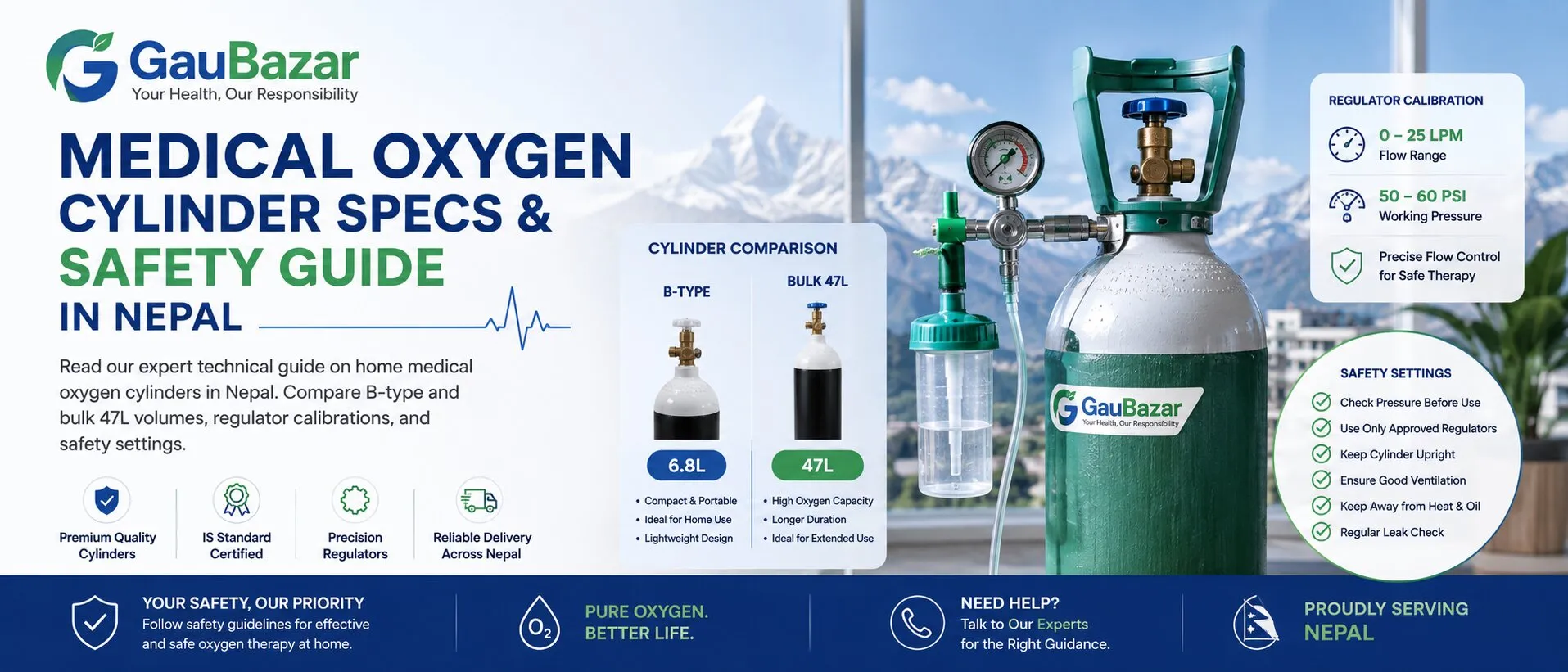
The utilization of high pressure medical gas systems remains a foundational element of home based respiratory therapies and emergency medical configurations across Nepal. For patients navigating advanced pulmonary pathologies, acute hypoxic crisis windows, or transitions from hospital intensive care units, compressed medical gas serves as an immediate, reliable lifeline. Unlike automated extraction machinery, a dedicated gas vessel delivers pure, highly concentrated medical oxygen instantly without requiring a continuous electrical power supply, making it an essential backup resource during local power grid interruptions.
However, managing a specialized high pressure steel or aluminum vessel at home requires understanding precise mechanical and volumetric parameters rather than simply handling a container. Miscalculating gas consumption flow rates or utilizing incompatible pressure reducing flowmeters can lead to premature exhaustion of gas reserves or hazardous pressure failures. To build complete transparency and establish an authoritative technical reference for healthcare administrators and home caregivers, this comprehensive blueprint maps out cylinder classifications, valve configurations, and structural handling safety rules before you buy an oxygen cylinder in nepal.
1. The Mechanical Engineering of Compressed Medical Gas Storage
To evaluate emergency medical gas equipment with the accuracy of a certified clinical engineer, you must look past basic external paint coatings and analyze the underlying structural specifications. Compressed gas vessels rely on strict metallurgical tolerances to contain volatile pressures safely:
- Structural Metallurgy and Working Pressures: Professional grade medical gas vessels are manufactured utilizing seamless industrial mild steel or specialized chromium molybdenum steel alloys to withstand standard filling pressures of one hundred and fifty kilograms per square centimeter (150 kgf/cm2). Premium ambulatory options utilize lightweight structural aluminum, which drops total empty vessel mass by over thirty percent to maximize transport ease.
- The Pin Index Safety System (PISS): To prevent a catastrophic mistake where a medical cylinder is accidentally filled with industrial gases or hooked up to the wrong delivery line, international medical protocols enforce strict mechanical matching systems. The valve head of a specialized portable B-type vessel utilizes specific physical pin locations that match only with a certified medical oxygen regulator, completely eliminating cross contamination risks.
- Chromed Brass Valves and Safety Burst Discs: The main shutoff valve assembly is forged from dense, non sparking brass often finished with chrome plating. Integrated inside the rear valve body is a critical safety burst disc module. If the cylinder is exposed to extreme room heat or accidental overpressurization, this internal safety disc ruptures automatically to vent the gas safely, preventing a catastrophic structural failure of the main cylinder shell.
2. Standardized Gas Volume and Operational Parameters
The total functional runtime provided by a compressed gas asset is determined by the cylinder physical dimensions, stored gas volume, and the clinical flow rates prescribed by the attending physician. Review this standardized architectural specification and allocation matrix reflecting active infrastructure parameters across the country:
| Cylinder Classification and Size | Gas Capacity (Liters / Cubic Meters) | Approximate Runtime at 2 LPM Flow | Primary Local Deployment Segment |
|---|---|---|---|
| Portable Handheld Canister | 12 Liters (Disposable Can) | Short bursts only via built-in mask | Ambulatory travel support, high-altitude trekking rescues |
| Small Portable Aluminum Tank | 400 to 500 Liters (approx. 0.5 cu.m) | 3.5 to 4 Hours of continuous flow | Emergency ambulance transits, mobile clinical patient transfer |
| Medium B-Type Medical Cylinder | 1400 to 1500 Liters (approx. 1.5 cu.m) | 11 to 12.5 Hours of continuous flow | Standard home care setups, local community clinic backup |
| Large Bulk Hospital Cylinder | 6500 to 7000 Liters (approx. 7.0 cu.m) | 54 to 58 Hours of continuous flow | Long-term home ventilation, main intensive care manifolds |
When monitoring these essential resource boundaries, analyzing structural acquisition investments alongside gas replenishment logistics is a vital parameter. Navigating active digital marketplace listings allows you to quickly evaluate local supplier inventories to establish a clear oxygen cylinder price in nepal baseline. Securing a complete structural kit comprising a certified high pressure regulator, dial flowmeter, and wheel trolley from verified providers guarantees reliable emergency protection without exposing your household budget to arbitrary middleman showroom inflation.
3. Mathematical Calibration of Remaining Gas Lifespans
A critical technical skill required of any home caregiver is the mathematical calculation of a cylinder remaining gas runtime. Relying on simple guesswork can lead to dangerous therapy interruptions if a cylinder runs dry in the middle of the night. In the Nepalese healthcare ecosystem, medical gas plants and respiratory technicians calculate tank depletion rates using a standardized clinical engineering formula:
Cylinder Runtime (Minutes) = [Cylinder Pressure (kgf/cm2) × Cylinder Factor] / Prescribed Flow Rate (Liters Per Minute)
The unit kgf/cm2 stands for Kilogram-Force per Square Centimeter. This is the standard metric value displayed on local medical pressure gauges across Nepal, representing how tightly the oxygen molecules are packed inside the steel vessel. When a tank is fully replenished at a local filling plant, it is pressurized to a standard safety limit of one hundred and fifty kilograms-force per square centimeter.
The cylinder factor varies based on the physical water capacity volume of the tank shell. For a standard medium B-type medical cylinder, the universal multiplication factor is exactly 0.14. For a large bulk forty seven liter hospital cylinder, the multiplication factor scales up to 1.4.
To put this into a real world clinical scenario: if a patient is using a medium B-type cylinder, and the dial needle on their pressure gauge reads one hundred and fifty kilograms-force per square centimeter, a prescribed flow rate of two liters per minute will yield the following operational breakdown:
Calculation Loop: 150 kgf/cm2 × 0.14 (B-Type Factor) = 21 Liters of available atmospheric gas volume. Dividing 21 by a flow rate of 2 Liters Per Minute reveals an exact remaining therapeutic runtime of ten point five hours.
Monitoring these values daily allows home care teams to schedule timely refilling sequences with local industrial oxygen gas distributors well before the internal pressure needle drops into the critical refill warning zone below fifteen kilograms-force per square centimeter.
4. Crucial Checklist for High-Pressure Regulator Integration
A high pressure gas tank cannot connect directly to a patient delivery line without an intermediate pressure reduction system. Caregivers must systematically review this four step checklist to ensure the regulator loop operates flawlessly:
- The Click Style Flowmeter Mechanism: Ensure your regulator integrates a clear, click adjustable or floating ball flowmeter calibrated from zero to fifteen liters per minute. This allows you to lock in the exact gas flow volume dictated by your medical clearance forms.
- Humidifier Bottle Bubble Testing: Compressed gas stored inside steel vessels is completely devoid of moisture. Passing this dry gas continuously through a nasal cannula can cause extreme throat irritation. Always fill the bubble humidifier bottle to the indicated watermark line using pure distilled water to moisturize the gas pathways safely.
- Inspecting the Teflon Gasket Seal: The primary connection point where the regulator nose piece inserts into the cylinder valve must utilize a fresh plastic or Teflon sealing washer. Failing to use a proper washer can cause silent high pressure gas leaks, exhausting your gas reserves into the room air without providing therapeutic benefit.
- Verifying Pressure Gauge Zero Settings: Before opening the main cylinder valve using your metal wrench spindle key, check that the regulator flow control dial is turned completely to the off position. Open the main spindle slowly by one full turn; a functional system will show the needle rise smoothly to reflect internal pressures without triggering hissing sounds.
5. Strategic Sourcing and Regional Valuation Nuances
Sourcing emergency medical gas infrastructure through traditional brick and mortar medical supply hubs often involves facing elevated pricing structures to cover physical showroom real estate overheads. Utilizing comprehensive online classified platform directories allows families to connect directly with bulk medical equipment distributors, private individuals who have completed their home care cycles, and certified healthcare liquidators, providing a direct route to research a competitive oxygen cylinder price in Kathmandu.
This transparent system enables you to purchase durable, certified high pressure steel tanks at considerable savings compared to standard emergency storefront rates. When looking to buy an oxygen cylinder online, always demand to view the structural stamp marks engraved directly onto the upper neck ring of the tank. These permanent markings verify original manufacturing dates, chemical batch numbers, and hydrostatic test certifications, ensuring your equipment meets rigorous safety parameters before you finalize your transaction.
Frequently Asked Questions (FAQs)
1. Why is it dangerous to allow oil or grease near an oxygen cylinder valve?
Pure compressed oxygen creates a highly accelerated oxidizing environment. If organic hydrocarbons like oil, lubricating grease, petroleum jelly, or oily lotions come into contact with high pressure oxygen gas, it can trigger a spontaneous chemical reaction resulting in intense fire or explosive flash failures, even without an external spark source. Always keep your hands completely clean and dry when handling gas valves.
2. Can an oxygen cylinder be stored horizontally beneath a patient bed?
Large bulk cylinders must always be kept in an upright, vertical position secured inside a dedicated wheel trolley or chained to a structural wall support bracket to prevent accidental tip-over hazards. Smaller, portable steel or aluminum tanks can be placed horizontally inside specialized anti roll floor cradles, provided the main valve assembly is protected against external physical impacts.
3. How often do steel medical gas cylinders require hydrostatic testing?
Under international and national safety protocols, high pressure seamless steel gas vessels are legally required to undergo comprehensive hydrostatic pressure testing once every five years. This technical procedure checks the metal volumetric expansion and elastic characteristics to ensure the vessel can continue containing high internal pressures safely without risking structural cracks or fatigue splits.
Conclusion
Integrating a medical grade compressed gas cylinder into a home care setup provides a reliable layer of respiratory security that functions completely independently of local electrical grids. By calculating gas volume consumption patterns, executing precise flowmeter calibrations, maintaining strict grease free environment safety boundaries, and utilizing digital marketplaces to analyze local oxygen cylinder price metrics, you can make a secure investment. Proceed methodically, monitor your pressure gauge dials daily, and maintain a safe, highly stable healing space for your loved ones.


Comments (0)
No comments yet - be the first to share your thoughts.