
Home CPAP and BiPAP Therapy: A Clinical Guide to Managing Complications and Side Effects
The introduction of non-invasive positive airway pressure (NIPPV) systems into home care environments across Nepal has fundamentally transformed long term therapeutic outcomes for patients experiencing chronic respiratory failure, hypercapnia, and complex sleep apnea syndromes. By maintaining a continuous column of pneumatic pressure, these medical devices act as a structural splint for the upper airway, optimizing alveolar gas exchanges throughout the night. However, achieving successful clinical resolution involves more than simply activating a device power cycle.
A significant percentage of home patients experience immediate physical side effects that can result in premature discontinuation of therapy if left unaddressed. Issues ranging from gastrointestinal air swallowing to severe upper airway mucosal drying frequently create immense discomfort. To establish an authoritative, clinical grade resource for healthcare providers, medical students, and home caregivers, this guide provides the precise mechanics to diagnose, troubleshoot, and mitigate positive pressure complications before you procure a bipap machine.
1. The Physiology and Mitigation of Aerophagia (Air Swallowing)
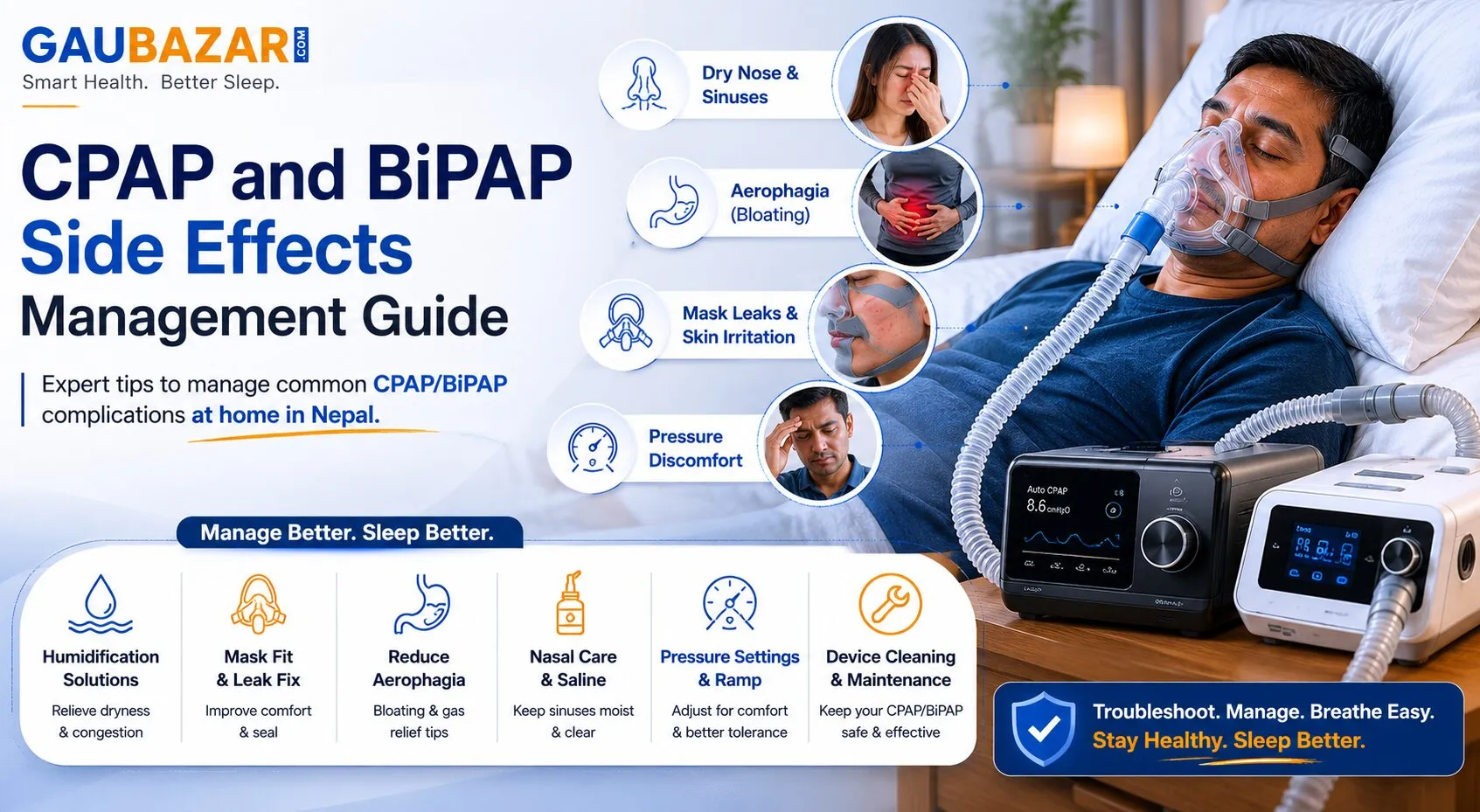
Aerophagia is a common, highly uncomfortable physiological side effect where pressurized therapeutic gas escapes down the esophagus and enters the stomach instead of traveling down the trachea into the pulmonary system. Patients dealing with aerophagia wake up experiencing acute abdominal distension, severe bloating, painful flatulence, and gastric reflux issues. This condition typically occurs due to two distinct mechanical triggers:
- Excessive Operational Pressures: If a fixed pressure device is calibrated to a target threshold that exceeds the patient literal upper airway closing pressure, the excess gas forces open the upper esophageal sphincter, filling the stomach cavity with air.
- Inadequate Expiratory Relief: When a patient attempts to exhale against a high, unyielding column of air, their natural airway coordination breaks down. The user may accidentally swallow gas as they struggle to complete an exhalation cycle.
To resolve persistent aerophagia, clinicians must closely analyze the device pressure configuration. Upgrading a patient from a basic fixed unit to an automatic auto-adjusting terminal can provide immediate relief. These advanced systems incorporate intelligent expiratory pressure relief algorithms that instantly drop the motor output speed by one to three units the exact millisecond exhalation is initiated. If gastric bloating continues despite these adjustments, it is highly recommended to consult your prescribing pulmonologist to transition the patient to a dual level system that offers independent expiratory control options.
2. Clinical Troubleshooting Protocol for Therapy Complications
Successfully managing home non-invasive ventilation requires a structured diagnostic approach to identify and fix system conflicts. Use this standardized clinical troubleshooting matrix to address common side effects encountered by patients across local medical supply networks:
| Clinical Symptom / Complication | Primary Mechanical Cause | Targeted Biomedical Intervention Strategy |
|---|---|---|
| Acute Abdominal Bloating (Aerophagia) | Therapeutic pressure exceeds esophageal sphincter threshold | Activate Expiratory Pressure Relief (EPR) or transition to dual-level BiPAP |
| Severe Nasal Dryness and Bleeding | Inadequate relative humidity in the delivered airflow | Increase heated humidifier chamber setting; integrate pre-bed saline sprays |
| Localized Eye Irritation and Dryness | Pressurized air escaping past the upper mask cushion seal | Execute full mask resizing; adjust top headgear straps while in horizontal posture |
| Nasal Bridge Ulceration / Sores | Excessive headgear strap tension causing localized capillary closure | Loosen headgear straps; apply hypoallergenic silicone pads or switch interfaces |
| Frequent Awakenings (Asynchrony) | Internal machine trigger algorithms misaligning with patient breath | Calibrate trigger sensitivity settings; check for massive system air leaks |
When implementing these adjustment protocols, referencing the baseline operational metrics of your system is highly critical. If you are currently in the process of evaluating distinct equipment architectures or configuring a new home environment, make sure to read our detailed blueprint on home cpap and bipap machine setup parameters. Ensuring your primary hardware installation aligns with clinical standards is the absolute first step in eliminating common user side effects.
3. Managing Nasopharyngeal Dryness and Cold Air Sensitivities
The delivery of high velocity, non humidified atmospheric gas can quickly overwhelm the natural moisture producing capabilities of the human nasal mucosa. When this upper airway drying occurs, patients experience persistent nasal congestion, thick mucous plug formation, throat soreness, and recurring nosebleeds. This issue is frequently exacerbated during the cold, dry winter months across various provinces of Nepal.
To completely resolve nasopharyngeal drying, the integration of active heated humidification is non negotiable. Modern home ventilation devices contain adjustable heating plates beneath their water chambers. If a patient experiences dry sinuses, the humidifier output should be increased progressively across a one to five scale. Furthermore, utilizing specialized heated breathing tubes is highly advantageous. These specialized lines contain internal copper heating wires that maintain constant gas temperatures throughout the tube length, eliminating rainout condensation while ensuring the patient receives warm, perfectly humidified air directly to their facial interface.
4. Resolving Mask Leaks and Pressure Area Ulcerations
Air leakage past the perimeter cushion of a facial interface is a primary driver of therapy failure. Small micro leaks escaping from the top edge of a full face interface redirect pressurized air directly across the patient eyes, causing severe corneal drying and conjunctivitis. Conversely, when caregivers attempt to completely eliminate leaks by overtightening the headgear straps, they create an even more dangerous complication: localized skin necrosis and open sores across the fragile nasal bridge.
Resolving this conflict requires understanding mask fit dynamics. A mask should never rely on raw mechanical compression to establish an airtight seal. Modern clinical cushions feature dual wall silicone layers engineered to inflate like a small balloon when pressurized gas enters the interface. If you encounter leaks, completely detach the mask frame from the face while the machine is running, allow the silicone layers to inflate fully, and gently place the interface back down onto the skin. If a patient continues to experience facial sores, it is wise to switch the interface completely. Swapping a bulky full face unit for a lightweight nasal pillows option removes all direct pressure from the nasal bridge entirely.
5. Advanced Software Analysis and Strategic Equipment Sourcing
When dealing with complex compliance issues, such as a patient who routinely removes their mask mid sleep without realizing it, relying on manual guesswork is ineffective. Caregivers must utilize the advanced data logs captured by modern therapeutic equipment. Reviewing the internal data card files reveals exactly when the mask drop offs occur, the precise leak rate levels preceding the event, and whether a sudden spike in airway resistance triggered a micro arousal cycle.
Sourcing these advanced diagnostic devices, replacement silicone cushions, or specialized heated breathing tubes directly from physical medical storefronts can often involve paying heavy distributor premiums. Utilizing open digital marketplaces allows families to communicate directly with private individuals, medical equipment liquidators, and specialty importers, providing a direct route to evaluate a competitive cpap machine price in nepal. Securing a clean, low hour terminal from an individual who has completed their therapy cycle allows you to acquire premium global brands like ResMed or BMC at massive savings compared to retail showroom costs. Before finalizing an online trade, make sure to cross reference our comprehensive architectural guide exploring the technical differences between cpap vs bipap machines to ensure your selected equipment can deliver the precise algorithm modes your patient requires.
Frequently Asked Questions (FAQs)
1. What are the absolute medical contraindications for using home CPAP or BiPAP therapy?
Positive airway pressure therapy must never be initiated if a patient is experiencing acute respiratory arrest, hemodynamic instability, or severe cardiac shock. Additional absolute contraindications include an inability to protect their own airway, an active unmanaged pneumothorax, excessive vomiting, or recent facial, esophageal, or cranial surgical trauma where high pneumatic pressures could compromise healing tissues.
2. Can a patient suffocate if the power drops completely while wearing a full face mask?
No, all medical grade full face masks are legally required to integrate an explicit anti-asphyxia safety valve located directly at the elbow connector. When the machine is running normally, the incoming air pressure pushes this internal rubber valve shut. The exact millisecond power drops and airflow stops, the safety valve drops down instantly, opening up a wide physical path that allows the patient to breathe ambient room air freely.
3. Why does my patient experience extreme claustrophobia or anxiety when the mask is applied?
Feeling anxious or claustrophobic is a highly common psychological response to forced airway pressure. To overcome this barrier, implement gradual exposure desensitization therapy. Have the patient hold the unattached mask against their face for short periods during waking hours while watching television. Then, connect the tube line and activate the machine lowest ramp setting during the day, helping the mind comfortably adapt to the sensation before attempting full night usage.
Conclusion
Bypassing the common physical complications of home positive pressure ventilation is a critical requirement for securing long term clinical success and optimizing patient respiratory safety. By systematically tracking gastric air swallowing factors, increasing heated humidification parameters, performing correct silicone mask inflation steps, and using digital marketplace directories to research real-world bipap machine price in nepal variables, you can establish an incredibly safe care environment. Proceed methodically, check all anti-asphyxia valves in person, and unlock a highly secure, therapeutic breathing experience for your family.


Comments (0)
No comments yet - be the first to share your thoughts.