
The Ultimate Guide to Buying a Second-Hand Car in Nepal
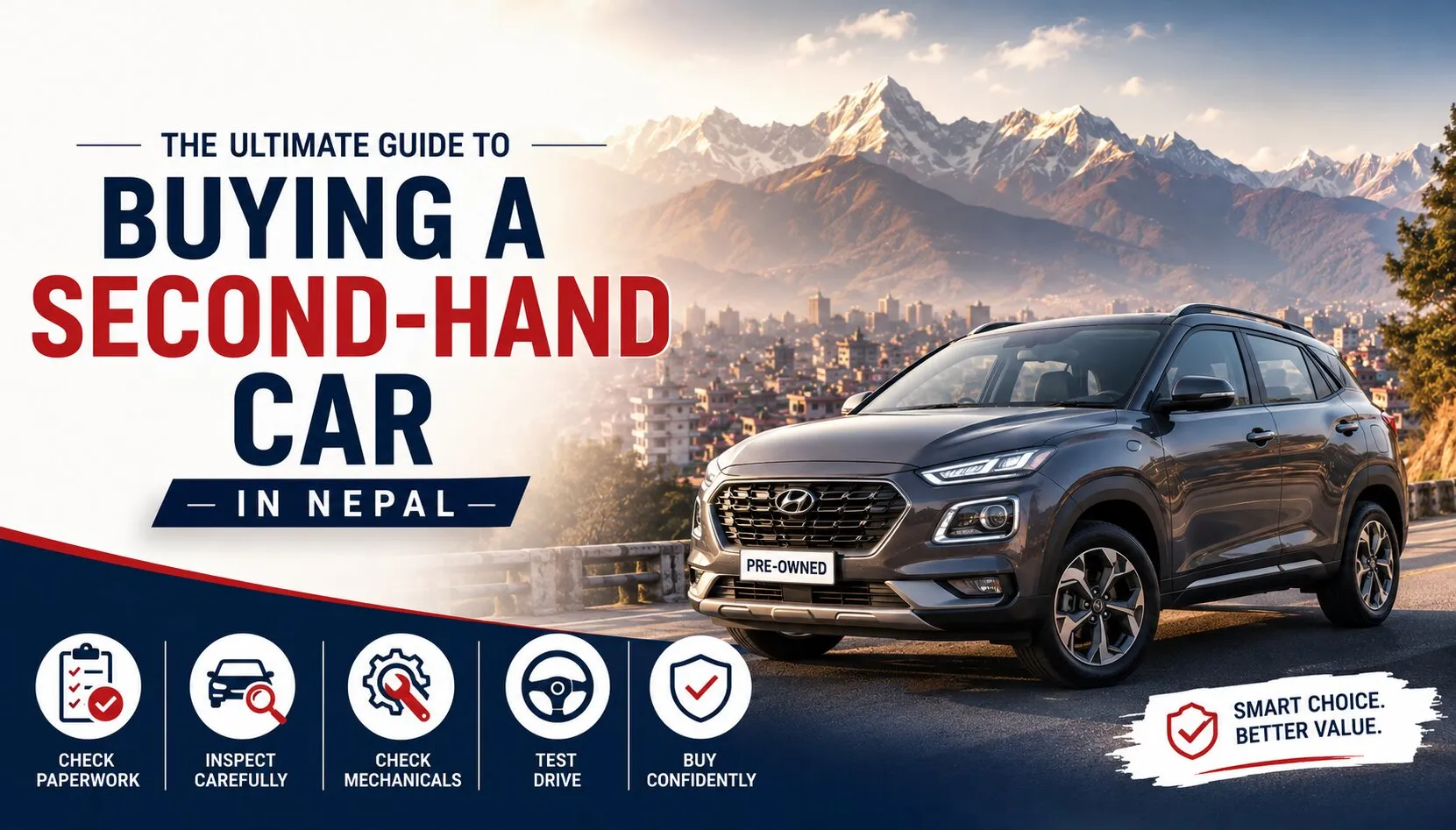
Buying a second-hand car in Nepal is one of the smartest financial decisions you can make. With the high import duties and taxes levied on brand-new vehicles, the used car market offers incredible value for money. Whether you need a reliable hatchback for the tight streets of Kathmandu or a rugged SUV for off-road trips across diverse terrains, purchasing a pre-owned vehicle saves you from steep initial depreciation.
However, navigating the used vehicle market requires strict due diligence. A deal that looks fantastic on the surface can quickly turn into a costly nightmare if the car has hidden mechanical issues or pending legal paperwork. To ensure you make a safe, informed, and confident purchase, here is the elite expert checklist on what to check before you hand over your money.
1. Verify the Paperwork: The All-Important Blue Book
In Nepal, a vehicle's mechanical condition is only half the story; the legal paperwork is equally critical. The vehicle registration certificate, universally known as the Blue Book or Billbook, is the most vital document you need to inspect.
- Ownership Details: Ensure the name in the Blue Book perfectly matches the seller's citizenship certificate. If they are selling on behalf of someone else, explicitly verify their legal authorization. Be highly cautious of cars that have had multiple owners in a short period, as this often indicates persistent, unresolvable issues.
- Tax Clearance: Vehicle taxes are collected annually by the provincial Transport Management Office (Yatayat Byawastha Karyalaya). Check the renewal pages in the Blue Book to ensure all road taxes are cleared up to the current fiscal year. Pending taxes accrue hefty fines that you will be legally liable to pay once ownership is transferred.
- Insurance Policy: By law, every vehicle on Nepali roads must carry at least third-party insurance. Ask for the current insurance certificate to ensure it is valid, and check whether it is a comprehensive policy or basic third-party coverage.
2. Exterior and Structural Inspection
Once the paperwork checks out, evaluate the physical vehicle. It is highly recommended to inspect the car in broad daylight because rain, shadows, or dim lighting can easily hide scratches, dents, and poor paint jobs.
- Check for Rust: While Kathmandu is relatively dry, cars from cities with higher humidity, or vehicles that are frequently washed and improperly dried, can develop rust. Inspect the lower body panels, wheel wells, and the edges under the doors.
- Accident Damage: Look closely at the panel gaps (the spaces between the doors, hood, and fenders). Uneven gaps are a major red flag indicating the car has been in an accident and poorly repaired. Furthermore, look for slight color variations between different panels, which suggests a partial repaint.
- Tires and Suspension: Replacing a set of tires in Nepal can be very expensive, easily costing anywhere from NPR 30,000 to over NPR 80,000 depending on the vehicle brand. Check the tread depth using a coin. Uneven wear on the tires usually points to alignment or suspension issues, which is a common problem given the varied road conditions in the country.
3. Mechanical and Under-the-Hood Checks
You do not need to be a certified mechanic to spot basic engine issues, though bringing a trusted mechanic along is the best practice before finalizing any deal.
- Fluid Leaks: Look under the car for any signs of dripping oil, coolant, or transmission fluid. Black or dark brown puddles indicate oil leaks, while green or pink spots usually mean coolant leaks.
- Engine Oil: Pull out the dipstick. The oil should be honey-colored or slightly dark, but never sludgy, thick, or gritty. If it looks like a milky brown milkshake, walk away immediately because this indicates a blown head gasket, which is a highly expensive repair.
- Battery Health: Look at the battery terminals. Excessive white or blue corrosion can lead to electrical starting problems. Check the physical condition of the battery; most car batteries in Nepal need replacing every three to four years.
4. Interior Condition and Electronics
The interior of the car reveals exactly how well the previous owner cared for the vehicle. Heavy wear and tear on the seats, steering wheel, and pedals should align with the car's stated mileage on the odometer.
- Air Conditioning: Turn on the AC to the maximum setting. It should blow cold air within a few minutes. AC repairs can be notoriously tricky and costly.
- Dashboard Lights: When you turn the key to the ON position without starting the engine, all warning lights (Check Engine, ABS, Airbag) should illuminate, and then turn off once the engine starts. If the Check Engine light stays on while the engine is running, the car requires a professional diagnostic scan.
- Electronics: Test every button. Roll all the windows up and down, check the windshield wipers, sound the horn, and test the infotainment system and all headlights.
5. The Essential Test Drive
Never buy a used car without taking it for a comprehensive test drive. Drive it on different types of roads, including smooth highways like the Ring Road and rough, unpaved inner-city streets, to truly test its capabilities.
- Listen to the Engine: Turn off the radio during the test drive. Listen closely for knocking, whining, or rattling sounds.
- Check the Suspension: How does the car handle speed bumps and potholes? It should not bounce excessively or make loud clunking noises.
- Test the Brakes: On a safe, empty stretch of road, apply the brakes firmly. The car should stop in a straight line without pulling to the left or right, and the brake pedal should not feel spongy.
- Transmission: If it is a manual car, the clutch should engage smoothly without slipping, and gears should not grind. For automatics, the gear shifts should be seamless without any jerking or delay.
6. Professional Inspection and Market Valuation
If the car passes your personal inspection and the test drive, the final step is to get a professional opinion. Take the vehicle to a reputable local garage. A pre-purchase inspection might cost a couple of thousand rupees, but it can save you lakhs in future repair bills.
Finally, cross-reference the asking price with the current market value. You can easily browse cars for sale in Nepal on Gaubazar to see what similar models are selling for in Kathmandu and across the country. Analyzing this factual data provides immense leveraging power during price negotiations and ensures you are getting a fair deal.
Frequently Asked Questions (FAQs)
1. How do I transfer ownership of a used car in Nepal?
Ownership transfer must be done at the Transport Management Office (Yatayat Byawastha Karyalaya) where the vehicle is registered. Both the buyer and seller, or their legally authorized representatives, must be present. You will need the original Blue Book, tax clearance receipts, citizenship certificates of both parties, and a duly filled transfer form.
2. Can I get a bank loan to buy a second-hand car in Nepal?
Yes, many commercial banks and financial institutions in Nepal offer auto loans for second-hand vehicles. However, the interest rates are generally slightly higher than those for new cars, and banks usually only finance cars that are less than seven to ten years old. The valuation of the car will be conducted by a bank-approved engineer.
3. Is it better to buy a used car from an individual seller or a recondition house?
Both options have their pros and cons. Buying directly from an individual seller often gets you a lower price as it cuts out the middleman. However, buying from a reputable recondition house might offer you a heavily polished vehicle and minor post-purchase support, though usually at a premium markup.
4. What is the average depreciation rate of cars in Nepal?
Due to high import taxes, vehicles in Nepal hold their value much better than in many other countries. Generally, a brand-new car loses about 15 to 20 percent of its value in the first year, and roughly 10 percent each subsequent year. Buying a three to five-year-old car is often considered the sweet spot for maximum value.
Conclusion
Buying a second-hand car is a fantastic way to upgrade your lifestyle and mobility in Nepal without breaking the bank. By meticulously checking the Blue Book, physically inspecting the vehicle, taking a rigorous test drive, and utilizing trusted online platforms to compare prices, you can confidently secure a reliable vehicle. Take your time, do not rush the process, and never let a seller pressure you into a hasty transaction.

Comments (0)
No comments yet - be the first to share your thoughts.