
The Complete Guide to Walking Aids in Nepal: Choosing Between Walkers, Crutches, and Canes
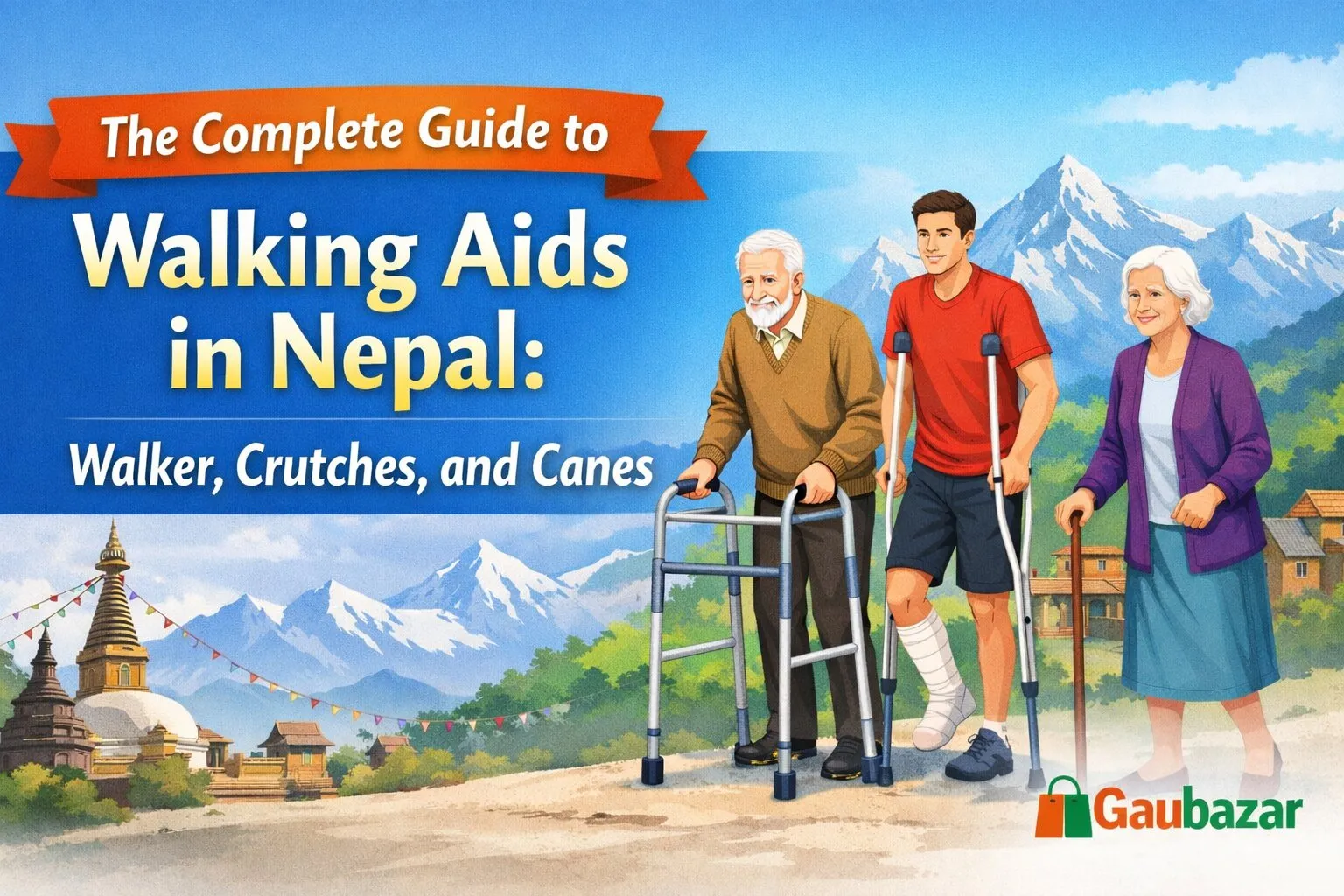
Mobility challenges can affect anyone — whether it’s an elderly parent gradually losing balance or someone recovering from a fracture or surgery. In Nepal, where many homes have uneven flooring, staircases, and outdoor terrain that isn’t always smooth, choosing the right walking aid becomes even more important.
Walking aids in Nepal are no longer seen as a last resort. They are practical tools that prevent falls, speed up recovery, and restore confidence in daily movement. However, selecting the wrong type can delay healing or even increase the risk of injury.
Understanding the difference between a walker, crutches, and a walking stick helps families make safer, smarter decisions.
Understanding the Mobility Support Spectrum
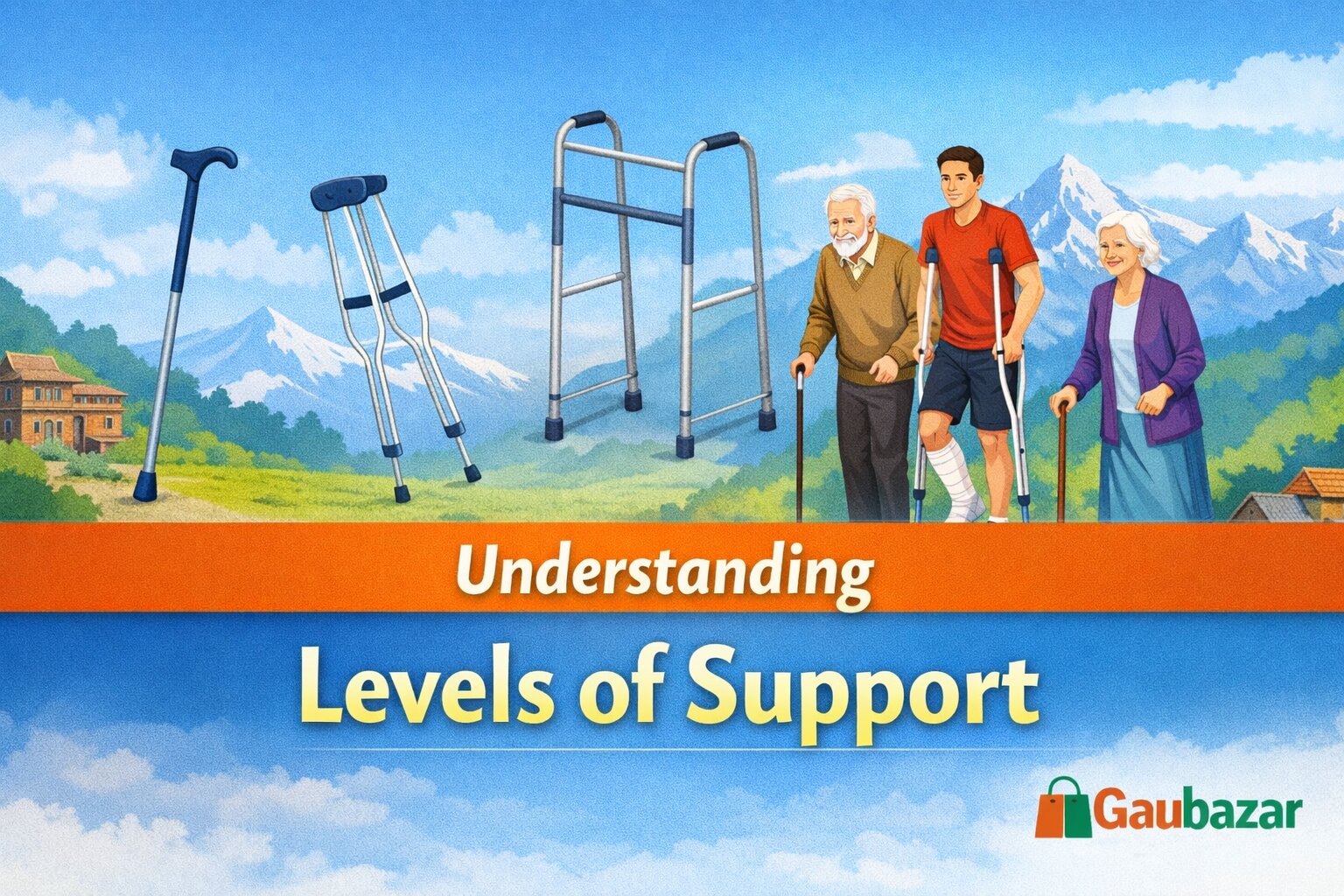
Not all walking aids provide the same level of support. They exist on a spectrum.
At one end are canes, offering light balance assistance. In the middle are crutches, designed to reduce or eliminate weight-bearing on an injured leg. At the highest level of walking stability are walkers, which provide a wide base of support for users who feel significantly unstable.
Choosing the right mobility support equipment depends on:
- Level of balance
- Ability to bear weight
- Upper body strength
- Recovery stage
- Home and outdoor environment
This is why professional assessment is often recommended during rehabilitation.
When a Walking Stick (Cane) Is Enough
A walking stick in Nepal is commonly used by elderly individuals who experience mild instability but can still walk independently.It is appropriate when:
- There is slight weakness in one leg
- Balance is mildly affected
- Support is needed mainly outdoors
- The person does not rely heavily on the device
A cane redistributes a small percentage of body weight and improves balance. However, if the user begins leaning heavily on it or feels anxious walking longer distances, it may indicate the need for stronger walking support.
For early-stage mobility decline, a cane can prevent progression to more serious falls.
When Crutches Are the Right Choice
Crutches in Nepal are most commonly used during injury recovery.They are appropriate when:
- A fracture requires non-weight-bearing movement
- A ligament injury needs partial support
- A doctor has recommended off-loading one leg
- Post-surgical recovery limits pressure on the lower limb
Crutches transfer body weight from the legs to the arms and shoulders. Proper adjustment and training are crucial. Incorrect use can cause shoulder strain or imbalance.
For short-term rehabilitation, crutches are highly effective. But they require coordination and upper body strength, which may not be suitable for elderly individuals with reduced stamina.
When a Walker Provides Maximum Stability
A walker in Nepal is recommended when stability is a primary concern.It becomes necessary when:
- There is high fall risk
- Balance is significantly reduced
- The individual feels unsafe walking alone
- Daily long-term support is required
- Recovery has progressed but stability remains weak
Walkers provide a broader base of support and distribute weight more evenly. For elderly users, this dramatically reduces fall risk. For injury recovery patients transitioning off crutches, walkers often act as the intermediate stage before independent walking.
In Nepal’s real-world environment — uneven sidewalks, village roads, tiled floors, narrow stair landings — this added stability can make a major difference.
Elderly Mobility vs Injury Recovery: Key Differences
Although both groups use walking aids, their needs differ.
Elderly Mobility Support
- Long-term use
- Focus on fall prevention
- Stability and confidence are priorities
- Often progressive mobility decline
For elderly individuals, preventing the first serious fall is critical. A well-matched walker or quad cane can prevent hospitalization and loss of independence.
Injury Recovery Support
- Short-term or mid-term use
- Focus on controlled weight distribution
- Gradual mobility improvement
- Guided by medical advice
In recovery cases, the walking aid must match healing progress. Transitioning too early or too late between crutches and walkers can slow rehabilitation.
Understanding this distinction improves decision-making.
Environmental Considerations in Nepal
Mobility decisions in Nepal often require extra thought.
Common challenges include:
- Multi-floor homes without elevators
- Outdoor stone paths or gravel surfaces
- Narrow doorways
- Uneven pavements
- Limited ramp access
This makes stability and maneuverability equally important. A compact foldable walker may be ideal for indoor use, while a more durable model may be necessary for outdoor terrain.
Selecting walking aids in Nepal requires evaluating daily routine, not just medical condition.
Signs You May Need to Upgrade Your Walking Aid
Mobility needs change over time.
Warning signs include:
- Frequent stumbling
- Increased fatigue
- Fear of falling
- Leaning heavily on existing support
- Slower than expected injury recovery
Ignoring these signs increases risk. Upgrading at the right time enhances safety and confidence.
Why Choosing the Right Walking Aid Matters
Falls are one of the leading causes of injury among older adults worldwide. Even a minor fall can lead to fractures, long recovery periods, and long-term mobility loss.
The correct walking aid:
- Improves posture
- Reduces joint stress
- Enhances stability
- Encourages safe independence
- Supports rehabilitation progress
Rather than symbolizing limitation, walking aids represent controlled independence.
Exploring Walking Support Options in Nepal
If you are comparing different types of walkers and crutches in Nepal, reviewing available models carefully can help match the right device to the user’s specific needs.
Families often explore various options before selecting mobility support equipment that fits their environment, physical condition, and long-term comfort.
Taking time to evaluate features such as adjustability, weight capacity, and portability ensures better outcomes.
Final Thoughts
Choosing between a cane, crutches, or a walker is not about appearance — it is about safety, recovery, and independence.
For elderly individuals, the right walking aid prevents falls and protects dignity. For injury recovery patients, it accelerates healing and restores mobility confidence.
Understanding the support spectrum allows families in Nepal to make informed, responsible decisions about mobility care.
Walking aids are not signs of weakness. They are tools for stability, protection, and empowered movement.



Comments (0)
No comments yet - be the first to share your thoughts.