
The Ultimate Guide to Buying a Second Hand Electric Car in Nepal: Expert Inspection and Pr
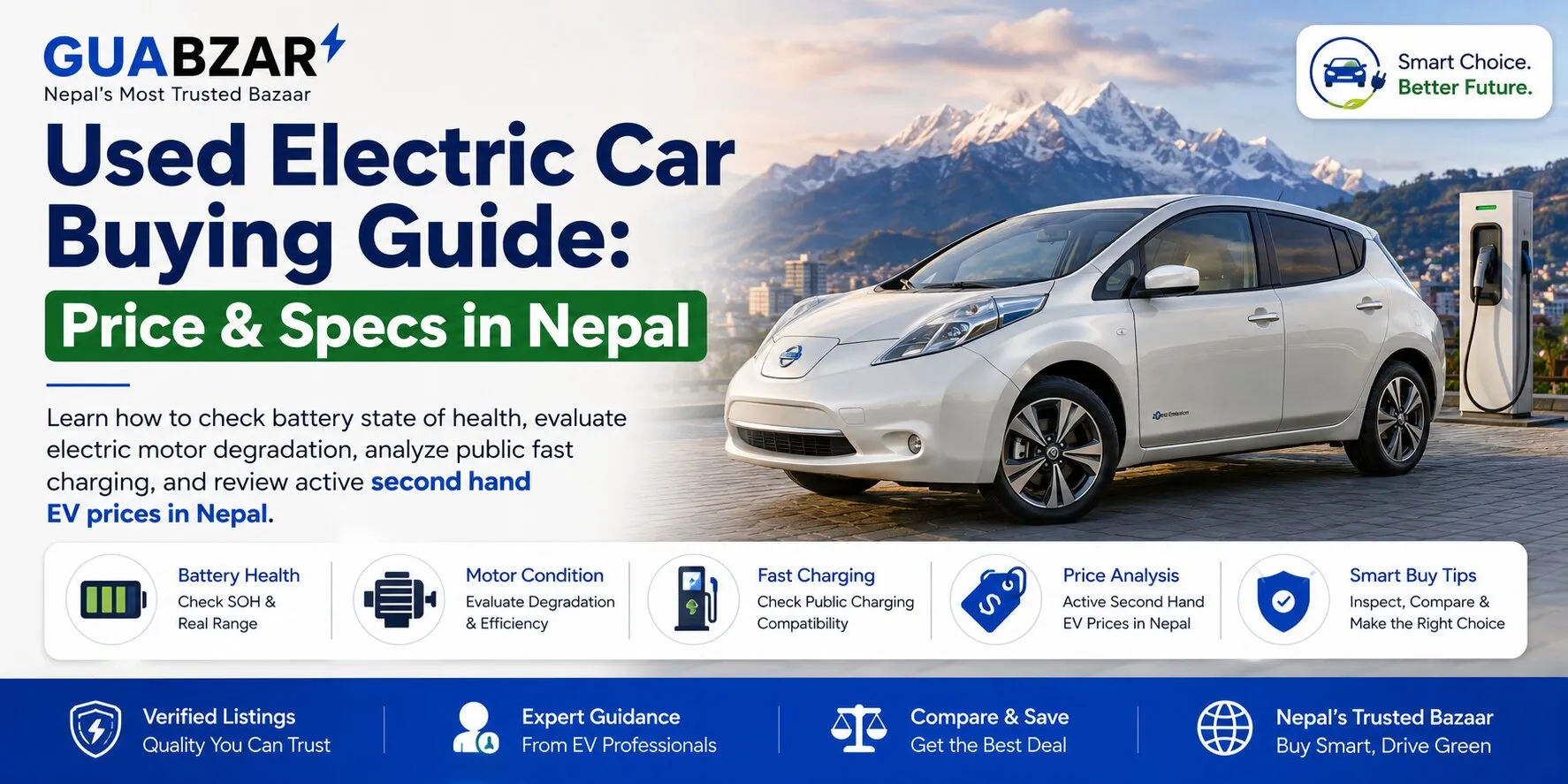
The automotive landscape across Nepal is undergoing a massive transformation, with electric mobility rapidly replacing traditional internal combustion engines. Driven by favorable government import policies, a rapidly expanding public fast charging infrastructure, and the immense daily cost of running petrol or diesel vehicles, thousands of drivers are making the transition to green energy. Because brand new electric models face heavy upfront distributor markups, registration waiting lists, and immediate initial depreciation, the pre owned market has quickly emerged as the most practical destination for value conscious buyers.
However, purchasing a second hand electric vehicle requires a completely different technical and diagnostic approach compared to evaluating a traditional fossil fuel car. Instead of examining mechanical pistons, exhaust smoke, spark plugs, or engine timing belts, an electric vehicle buyer must act as an electronic systems inspector. Your primary focus must pivot toward battery chemical degradation, software management firmware, thermal cooling efficiency, and high voltage component insulation. To ensure you make a safe, highly informed, and risk free investment, here is the absolute definitive 0.01 percent elite level guide to inspecting and buying a used zero emission vehicle before you search active listings to buy an electric car in Nepal.
1. The Scientific Core: Verifying Battery State of Health
The massive lithium iron phosphate (LFP) or ternary lithium battery pack is the single most valuable component inside an electric vehicle, often accounting for up to fifty percent of its total manufacturing value. Unlike a mechanical engine that can be repaired piece by piece at a local garage, a permanently degraded or physically damaged battery pack cannot be salvaged easily and requires an incredibly expensive total unit replacement. Therefore, determining the exact State of Health (SOH) of the battery array is your absolute highest priority.
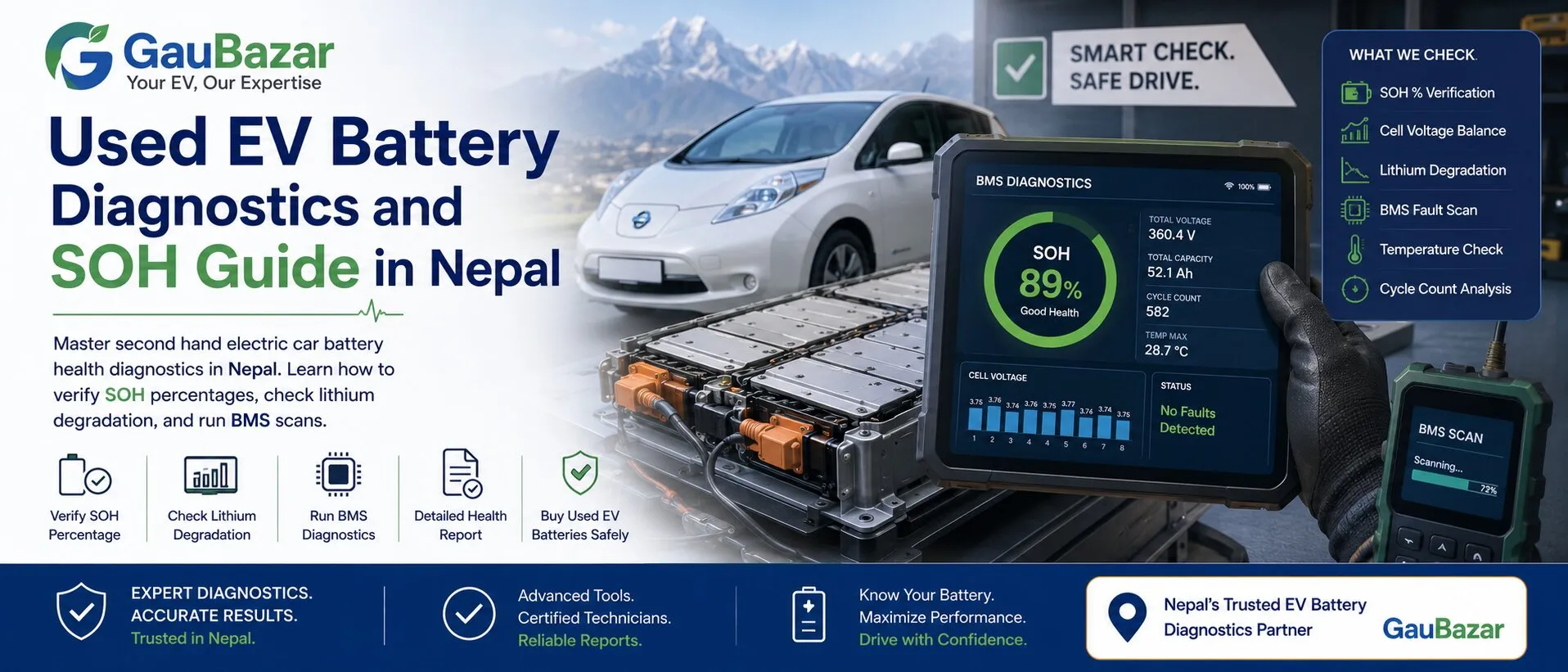
Never rely on the standard battery percentage bar displayed on the digital dashboard screen, as that only indicates the current state of charge. Instead, make it a mandatory condition of purchase that the seller accompanies you to an authorized factory distributor service center to conduct a full On Board Diagnostics (OBD) system scan. This diagnostic scanner reads the internal battery management system data directly from the vehicle computer to provide a definitive SOH percentage. A pristine, reliable pre owned electric car should maintain an SOH above eighty five percent. Any vehicle displaying an SOH below eighty percent indicates severe chemical degradation, meaning the real world range will be drastically restricted, and the asset value should be heavily discounted during price negotiations.
2. Real World Range Assessment versus Theoretical Ratings
When analyzing advertisements for electric vehicles, you will frequently encounter driving range figures calculated under ideal laboratory test parameters, such as the Worldwide Harmonized Light Vehicles Test Procedure (WLTP) or New European Driving Cycle (NEDC). However, real world driving conditions in Nepal are vastly different due to aggressive altitude changes, rough terrain, unpaved neighborhood streets, and severe urban traffic congestion.
To accurately calculate the practical range of a pre owned vehicle, you must cross reference its remaining battery kilowatt hour capacity against local topography demands. For example, an electric car with a forty kilowatt hour battery pack that covers three hundred kilometers on flat, smooth plains might only deliver two hundred and twenty kilometers when climbing steep hill roads around the valley or idling with the air conditioner running continuously in heavy Kathmandu traffic. Always base your financial calculations on these conservative, real world range realities rather than the optimal numbers printed in manufacturer marketing brochures.
3. Fast Charging Protocols and Port Wear Analysis
The long term usability of an electric car depends heavily on its ability to access public charging infrastructure during inter district travel between major hubs like Kathmandu, Pokhara, Chitwan, and the highway routes of the East West highway. You must meticulously inspect the physical charging port assembly located on the vehicle body panel:
- Port Physical Integrity: Look inside the charging flap for any signs of hairline cracks, loose metal pins, structural warping, or black plastic burn marks. Burn marks or melted plastic are severe warning signs indicating past electrical short circuits or poor contact during high current charging.
- Standard Compatibility: Ensure the vehicle utilizes the universally adopted Combined Charging System 2 (CCS2) protocol for DC fast charging. This matching standard ensures the car can seamlessly interface with the vast majority of government and private fast charging stations distributed across the country.
- Live Test Cycle: Drive the vehicle to a commercial DC fast charging station during your test drive. Plug the connector in to confirm that the vehicle onboard charging computer initiates the handshake smoothly, locks the cable securely, accepts high current input without overheating, and does not trip any safety fault warnings on the instrument cluster.
4. Weight Dynamics, Suspension Wear, and Underbody Safety
Because battery packs are incredibly dense and heavy, electric cars weigh significantly more than traditional petrol hatchbacks or compact SUVs of equivalent dimensions. This massive extra weight places continuous, heavy structural strain on the vehicle suspension system, steering linkages, rubber bushings, strut mounts, and hydraulic shock absorbers. During your road test, listen carefully for any deep metallic clunking, squeaking, or loose rattling noises when navigating over speed bumps, potholes, or unpaved sections of road.
Furthermore, because the heavy battery enclosure is bolted directly to the underside floor of the chassis, ground clearance and underbody protection are critical safety factors. It is mandatory to take the vehicle to a workshop and lift it on a hydraulic hoist to inspect the undercarriage. Examine the protective metal or composite underbody skid plates for deep scratches, sharp indents, structural dents, or punctures. Any impact that has breached the outer protective plate can compromise the airtight, watertight sealing of the main battery pack, creating a severe electrical safety hazard during heavy monsoon downpours and water wading scenarios.
5. Provincial Tax Slabs and Legal Document Verification
One of the most lucrative financial advantages of owning an electric vehicle in Nepal is the highly subsidized annual road tax structure enforced by the provincial Transport Management Office (Yatayat Byawastha Karyalaya). Compared to petrol or diesel vehicles which face steep annual fees based on engine displacement, electric cars pay highly reduced rates categorized strictly by motor power output in kilowatts.
When reviewing the vehicle registration document, universally known as the Blue Book, verify that the recorded motor kilowatt rating matches the exact physical specifications of the vehicle. Check the tax clearance stamp pages carefully to ensure that all provincial road taxes have been fully cleared up to the current fiscal year. If the previous owner has allowed the registration renewal timeline to lapse, pending taxes will accrue compounding fines at a rate of thirty two percent per year, a heavy financial liability that will transfer completely to you if you do not clear it prior to ownership transfer.
6. Analyzing Second Hand EV Prices in Nepal
The resale value of an electric vehicle is heavily influenced by the long term reliability of its battery chemistry and the local availability of software support from the official authorized distributor. When researching the market, focus your efforts on mainstream global manufacturers that maintain a strong footprint across the country:
| Vehicle Model & Lineup | Battery & Motor Specifications | Key Market Dynamics & Valuation |
|---|---|---|
| Tata Nexon EV & Tiago EV | Liquid-cooled ZipTron powertrain with durable LFP battery packs. | Highly popular with massive parts availability. Standard used models range from twenty to thirty five lakh rupees depending on condition and trim. |
| BYD Atto 3 & Dolphin | Ultra-safe proprietary Blade Battery architecture with high thermal thresholds. | Exceptional value retention. Pre-owned models are highly sought after due to minimal battery degradation across high mileage use cycles. |
| MG4 EV & ZS EV | High capacity battery modules paired with advanced driving assistance safety suites. | Favored by professionals looking for premium cabin space, structural refinement, and long distance highway stability. |
To avoid falling victim to inflated pricing structures from traditional third party recondition houses, you must anchor your expectations in real time market data. You can easily benchmark current valuations and research competitive second hand EV prices in Nepal by analyzing active classified listings, giving you immense factual leverage to secure a fair and highly lucrative deal.
Frequently Asked Questions (FAQs)
1. Do electric car battery warranties transfer to the second owner in Nepal?
Yes, major official automotive distributors tie their extensive eight year battery and motor warranties directly to the unique Vehicle Identification Number (VIN) rather than the individual owner. This means the remaining warranty balance transfers automatically to the buyer, provided the vehicle has been serviced regularly at authorized centers and has not undergone unauthorized electrical modifications.
2. How long do the batteries of used electric cars last before needing a replacement?
Modern lithium iron phosphate (LFP) batteries utilized by top tier brands are engineered to survive between two thousand to three thousand full charge and discharge cycles before dropping to eighty percent capacity. For an average commuter covering forty kilometers a day, this translates to over ten to fifteen years of reliable operational life, making the risk of sudden battery failure remarkably low.
3. What is the difference between slow AC charging and fast DC charging for battery wear?
Slow AC charging, which is performed overnight at home using a standard residential wall socket or a dedicated home wallbox charger, is highly gentle on battery chemistry because it generates very little thermal stress. Frequent, exclusive use of high power public DC fast chargers can slightly accelerate battery degradation over multiple years due to elevated temperatures, which is why a balance of home and public charging is recommended.
Conclusion
Migrating to electric vehicle ownership is an incredibly intelligent strategy to protect your monthly household budget from volatile global oil prices and high fuel expenditures. By systematically conducting a professional battery health scan, verifying the structural integrity of the underbody skid plates, checking fast charging port functionality, and using trusted digital classifieds networks to track down authentic electric cars in Nepal, you can securely bypass steep retail inflation. Take your time, proceed methodically, and complete your diagnostics before finalizing your transaction.


Comments (0)
No comments yet - be the first to share your thoughts.